Game Engines – To build, or not to build: The Eternal Conundrum (Part 5)
On September 27, 2018, I left a comment on Part 4 of this series: “Where is part 5?” One minute later Tiogus replied: “Elias is supposed to finish part 5, thanks.”
He was right. Pieces of this post have been sitting in my head (and in a folder on my laptop called designs) ever since. I’m finally finishing it now for a very good reason: The Descent is coming back. It’s being re-released as Cave Glider, and this time it’s the game we dreamt about in 2014. More on that at the end.
This series is about one question: to build or not to build. Parts 3 and 4 were about code, and about the engines and libraries we should have picked instead of writing everything ourselves. This part is about the other dependency nobody warned us about: art.
(Tiogus promised that the next article would be about Condor Wars Redux. That story is still his to tell.)
2010: a pink wall and a paper plane
This is the oldest screenshot I have of The Descent. It’s November 12, 2010, 11:30 PM. Eclipse is open, the Android emulator is running, and the game is a pink brick wall, two yellow rectangles, a tiny paper plane and a score counter that says 2.
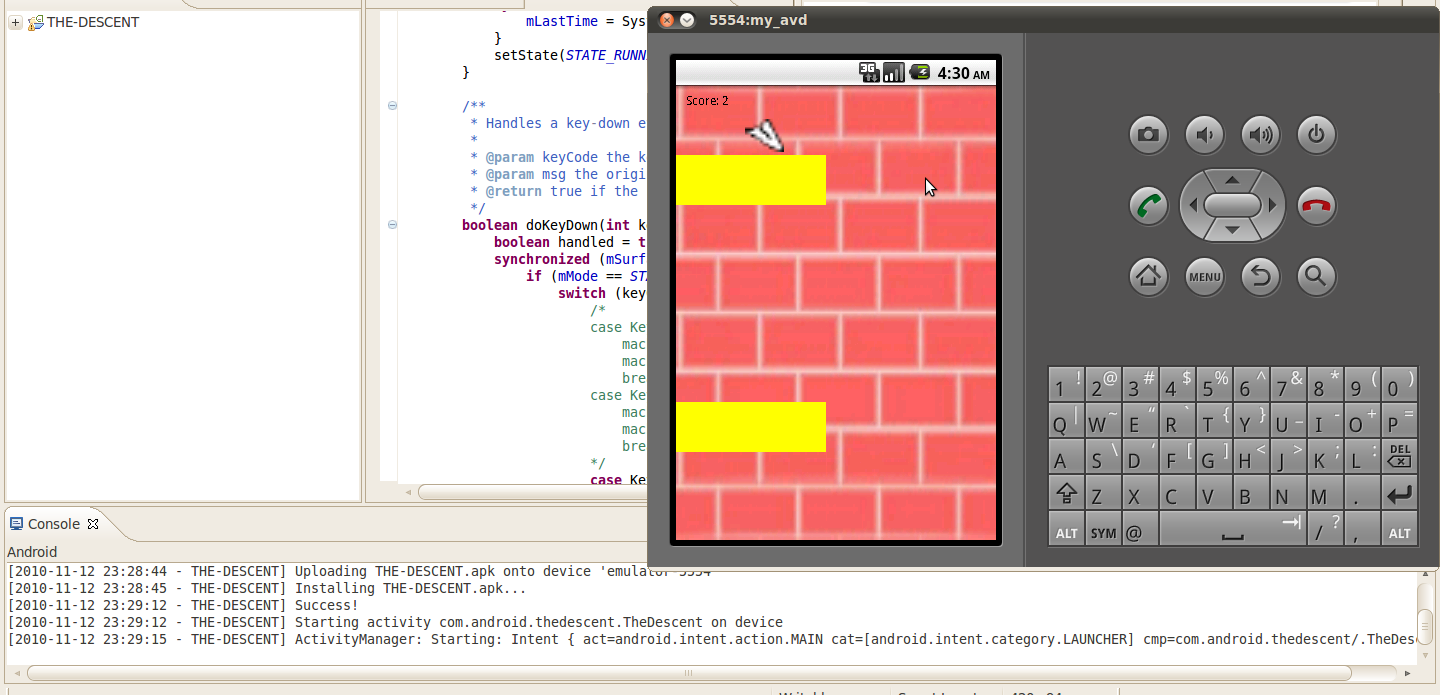
November 12, 2010: the first build of The Descent, running in the Android emulator.
Placeholder art, and honestly, already a game. Remember that paper plane. It comes back.
2011: the digger
As Tiogus told in Part 3, in 2011 the hero became a digger drilling through the layers of the Earth’s crust. We brought in our first freelance designer (the one we called Claudia Pulcher in The Making of The Descent; the pseudonyms stay). She drew a beautiful green drilling machine in seven angles, and backgrounds that got hotter the deeper you dug.
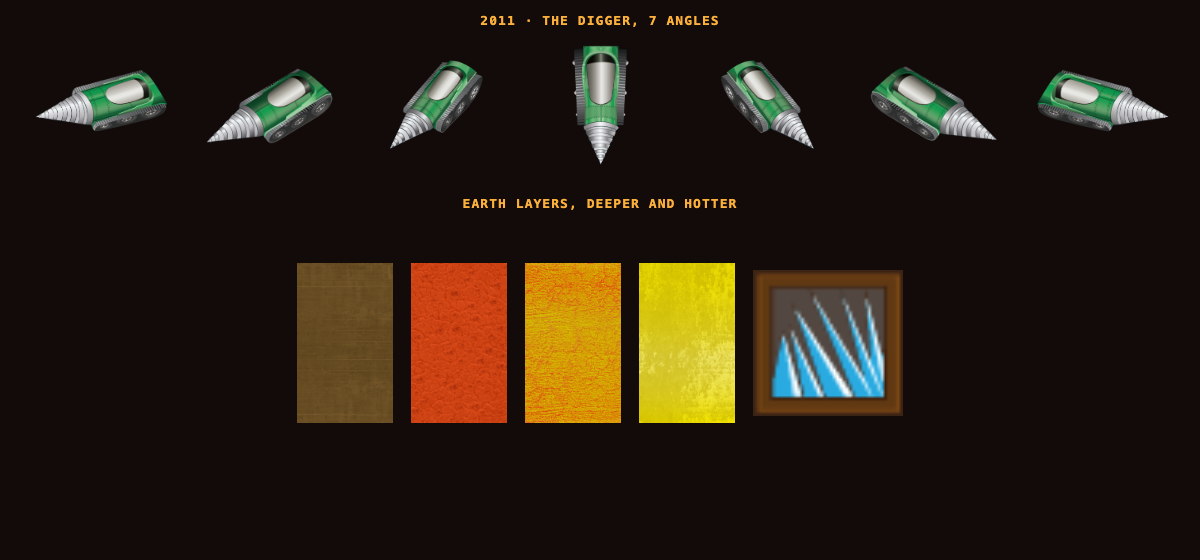
The 2011 art: the digger in seven angles, and the layers of the Earth, from dirt to magma.
None of it shipped. By August 2011 we were burnt out, Tiogus went back to school, and The Descent went into the freezer.
2014: the gliding man, and a cave full of secrets
When we brought The Descent back from the dead in the spring of 2014, the code side went well: Tiogus built a prototype with Cocos2D, and I moved it to SpriteKit. For once we didn’t write our own engine.
The art side was a different story. Our first mockups still used the old digger, drilling past little hidden caves in the rock. That was the plan: every layer of the earth would hide secrets. A treasure chest, a well full of fish, the gnomes’ kitchen, a secret stash, a buried lab, a snake watching TV, a lava beach with an umbrella, a baby dragon, a dragon’s eye, the seven dragon balls, a buried skeleton wearing a suspiciously familiar green cap. Easter eggs everywhere.
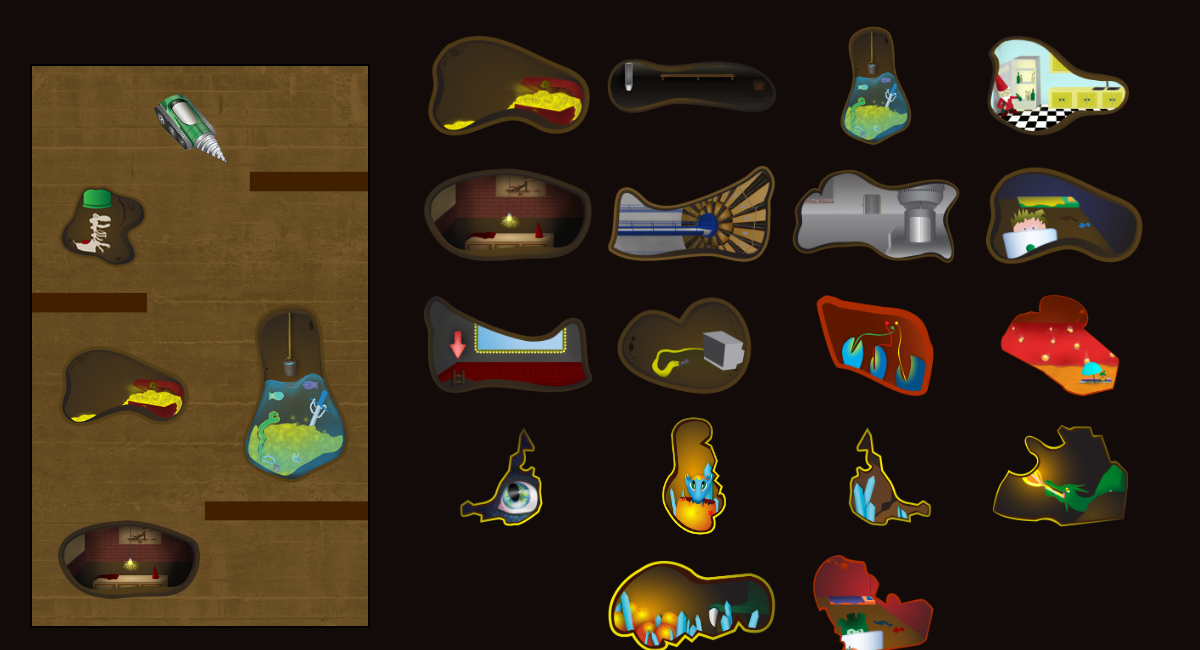
April 2014: a mockup with the digger, and the secret caves we wanted players to find along the way.
And we knew what we wanted it to look like: pixel art.
This time we tried to do things properly. In May 2014 I wrote a design bible for our new designer: the protagonist (a character we called the “GLIDING MAN”) with exact sprite sizes for each angle, obstacles built out of 2:1 rectangles with minimum and maximum sizes per level, backgrounds on a 12 × 43 grid, and a mockup of how level III would look on an iPhone 4. We even had a spreadsheet, paper_plane.xlsx, cataloguing obstacle patterns: right, left, double, and what follows what.
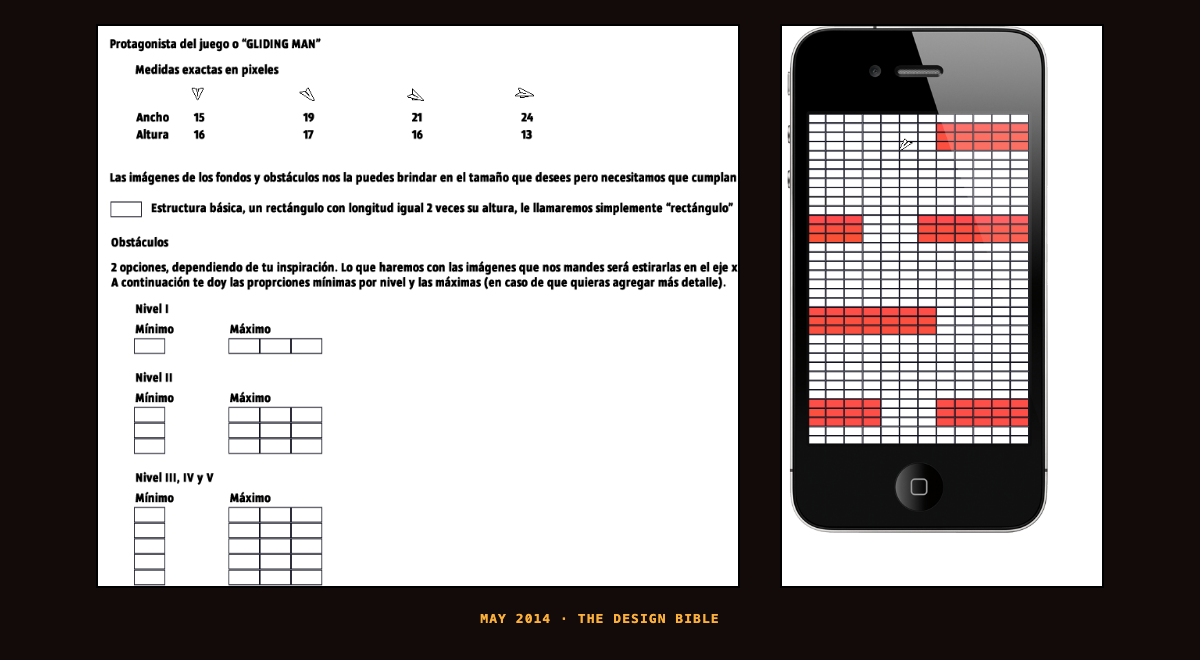
The May 2014 design bible (in Spanish): the gliding man’s sprite sizes, obstacle proportions per level, and level III on an iPhone 4.
2014–2015: the no-show year
Our second designer, Quintus Sertorius in the making-of, came on board in April 2014. His first deliveries, in June, were promising: a pilot hanging from a hang glider with red-and-white chevron wings, clouds, obstacles and floating islands.
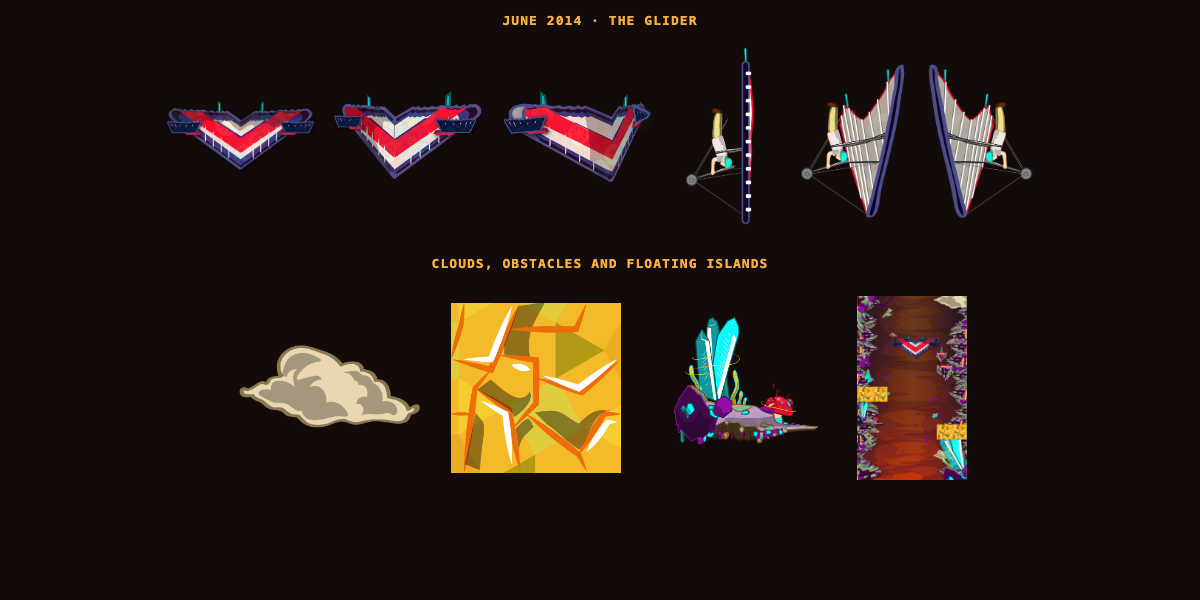
June 2014: the hang glider, and the first obstacles and scenery.
Then things stalled. In Colombia we have an expression for this: mamar gallo. It means stringing someone along: always joking around, always “almost done”, never quite delivering. From April to the end of July 2014, that’s what we got. Then we took a break of our own until October (that part is on us). From October until the end of February 2015, more of the same: missed dates, silence, files that never came.
When files did come, they didn’t always move us forward. In January 2015, eight months in, we received a completely new direction: a zeppelin, a man riding a bomb, a galleon, a mechanical fish, a tank, a dinosaur skeleton, the Aztec calendar stone, a holy grail. Interesting drawings, but not one finished level, and nothing like the game we had specified.
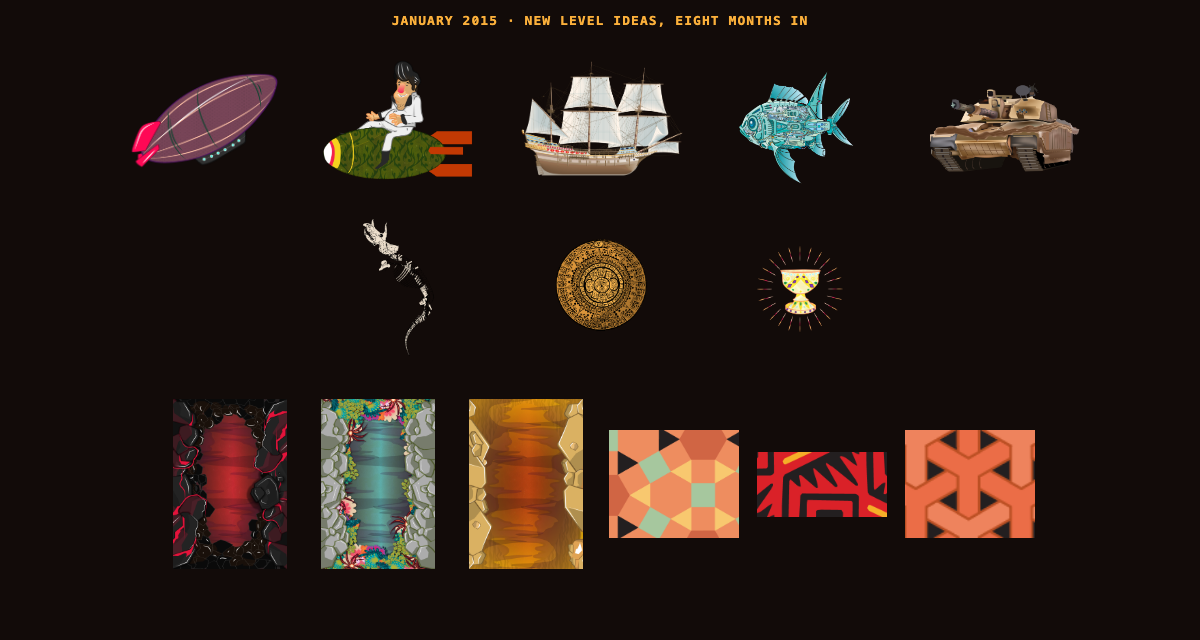
January 2015: new ideas, eight months into the project.
In February 2015 we parted ways. That made two designers in five years and zero shipped art. Along the way we also paid for artwork that never arrived, money we never saw again.
2015: a trade, and a style we didn’t want
By 2015 we had no budget left for designers. What we had was a skill to trade. I had been doing freelance work for Carlos Forero of Milmentes, so we made a deal: I would help with his website, and in exchange he would do the artwork for The Descent.
Carlos started in earnest in April 2015. Two months later, we had everything: the hero in seven angles, the caverns and the transitions between them, achievement badges and the title screen.
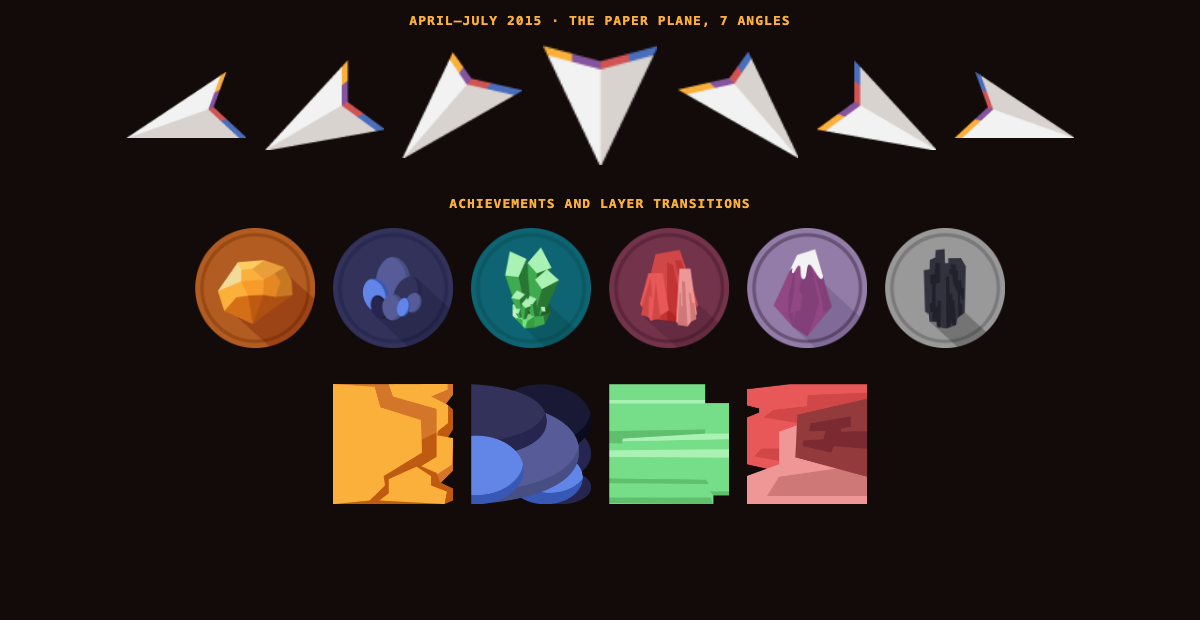
April–July 2015: Carlos Forero’s paper plane, achievement badges and cavern transitions.
The catch: it wasn’t the style we wanted. It was flat and geometric, and we had dreamt of pixel art. At first we didn’t like it. But it was complete, it was consistent, and it arrived on time, which is more than five years of our “perfect” plans had produced. On June 22, 2015, I clicked Publish in Xcode.
And the hero? A paper plane. Five years, three designers, a digger and a hang glider later, we were back to the paper plane from that 2010 emulator screenshot.
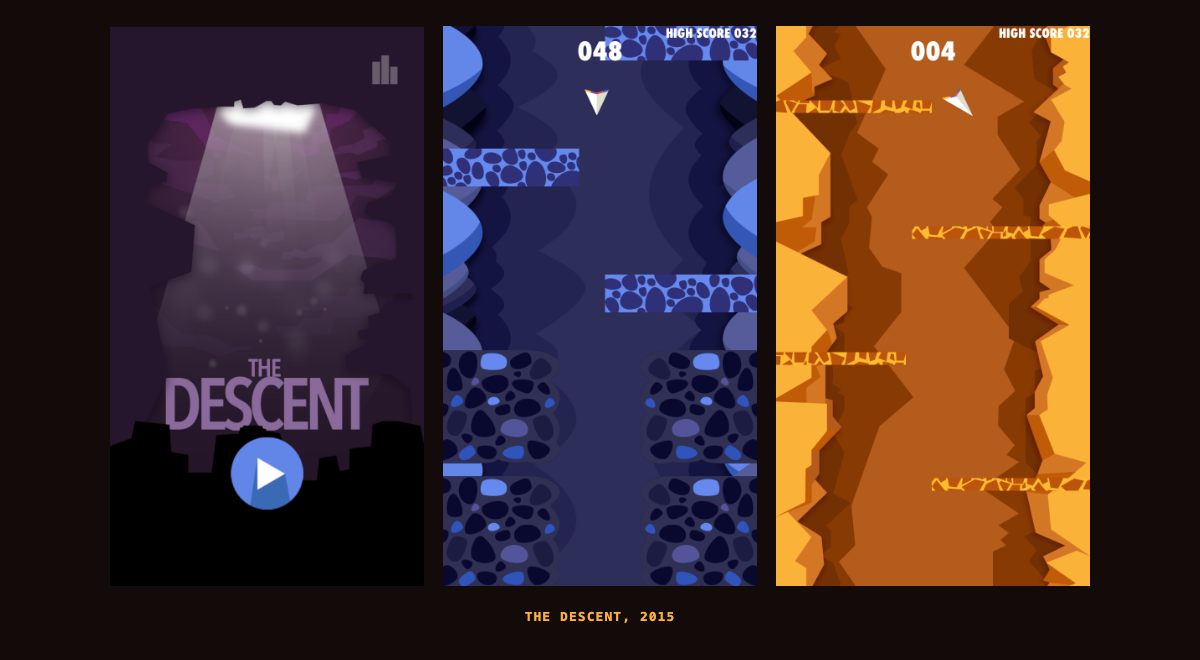
The Descent as it shipped in 2015.
What we had to cut
The easter eggs never made it. There was no budget left for dozens of hand-drawn secret caves, and every week spent on art was another week The Descent wasn’t in the App Store. The game shipped with six caverns and nothing hidden in them. The gnomes, the dragon and the snake watching TV stayed in a folder.
Build or buy, art edition
Looking back, our art story repeats every mistake we made with code:
- Art is a dependency, just like a library. We picked ours the way we picked the Android Canvas library: quickly, hopefully and without a plan B. Pick an artist you can rely on, not just one whose portfolio you like.
- Pay for delivered work, not for promises. Milestones, dates, and payment when the files arrive.
- Decide the style before you hire, and write it down. The design bible was the best thing we did in 2014. It came a year too late.
- Placeholder art is fine. A pink wall and a yellow rectangle were enough to know if the game was fun.
- A finished style beats a perfect one you never get. We didn’t choose flat art. It chose us, and it shipped.
2026: Cave Glider
Ten years later, we finally have what we were missing back then: the resources to build the game we actually dreamt about. The Descent is being re-released as Cave Glider.
The hero is a pilot on a hang glider, the “gliding man” from the 2014 design bible, finally flying. The feel of the original is preserved from the 2015 source code: the seven steps of banking, the descent speeds, the obstacle patterns and the scoring. Around it, the cave grew from six caverns to twenty (and counting), and the easter eggs are back: an explorer stuck headfirst in a narrow passage, a sleeping octopus inside a treasure chest, a tea break under a giant mushroom, Robby the Robot waving from a balcony, and, snagged in a ventilation grille, a small cream-colored paper plane. That one’s a nod to the plane that carried The Descent in 2015.
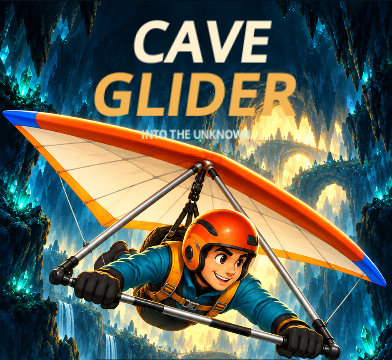
Cave Glider, currently in beta testing.
And to close the loop on this series: we didn’t build an engine this time either. Cave Glider runs on Godot.
It’s in beta testing right now. We’ll share more very soon.
Tiogus, Part 6 is yours.